
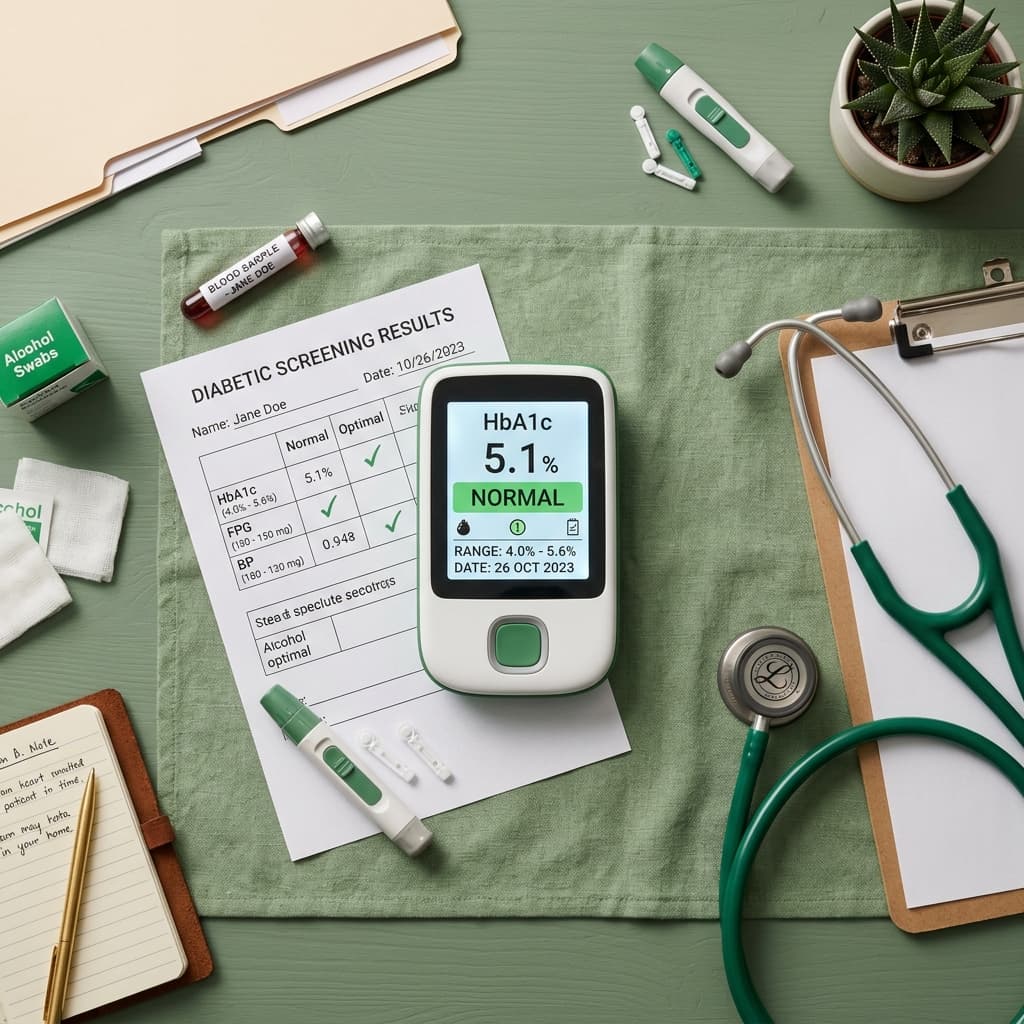
Managing diabetes requires more than just daily finger-prick tests. To truly understand how well your blood sugar is controlled over time, doctors rely on the HbA1c test.
## What is HbA1c? HbA1c stands for Hemoglobin A1c. Hemoglobin is the protein in your red blood cells that carries oxygen. When sugar enters your bloodstream, it attaches to hemoglobin. The HbA1c test measures the percentage of your red blood cells that have sugar-coated hemoglobin.
Because red blood cells live for about three months, the test reflects your average blood glucose levels over the past 8 to 12 weeks.
## The Difference Between Fasting Blood Sugar and HbA1c A fasting blood sugar test tells you your glucose level at that exact moment. It can be influenced by what you ate the night before or how stressed you are. The HbA1c test, however, cannot be "cheated." It provides a long-term, stable picture of your glucose control.
## Target HbA1c Levels - **Normal:** Below 5.7% - **Prediabetes:** 5.7% to 6.4% - **Diabetes:** 6.5% or higher
For most adults living with diabetes, the American Diabetes Association recommends aiming for an HbA1c level below 7%.
Regular HbA1c testing is a cornerstone of effective diabetes management. If you haven't had one recently, book an appointment to stay on top of your health.
Want an accurate checkup?
Book a home sample collection today and get verified reports on WhatsApp.
Why Preventive Care Matters?
Diagnostics is not just about finding what's wrong; it's about confirming what's right and taking action before symptoms appear. Regular health monitoring is the most effective way to manage chronic conditions like diabetes and heart disease.